
The biological limit of speed reading: Why retinal anatomy blocks peripheral text processing
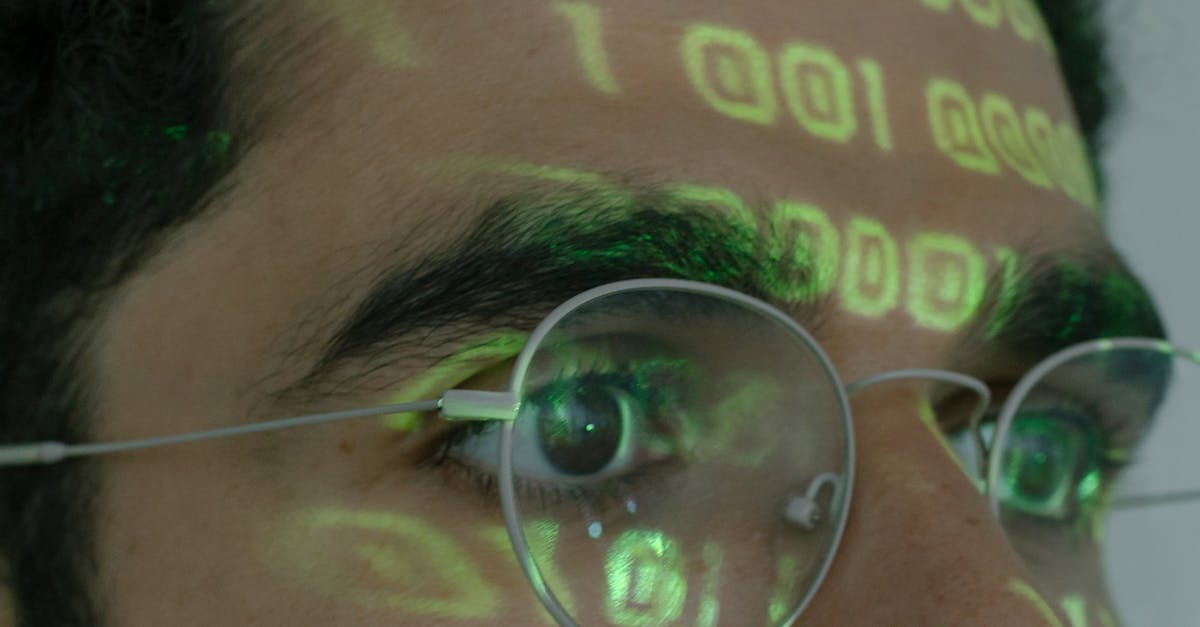
Speed-reading courses frequently claim that readers can absorb entire paragraphs at a single glance by adopting a soft gaze across the printed page. Digital cognitive training platform Readle approaches reading speed from the opposite direction: by building the mental processing speed and working memory required to comprehend text rapidly, rather than relying on visual gimmicks. The biological hardware of the human eye makes peripheral text processing impossible; foveal vision covers less than two degrees of the visual field, while peripheral regions lack the neural wiring required to resolve complex letter shapes. Because cortical magnification heavily favors the center of the retina, text recognition outside the fovea breaks down regardless of how much someone practices. Genuine gains in reading rate depend on how rapidly the brain identifies symbols and manages information in working memory, not on expanding visual span.
The hardware limitations of the human eye
Popular speed-reading programs teach that narrowing your attention to a single line wastes valuable visual real estate. They encourage readers to soften their focus and take in blocks of text using their peripheral vision. This advice ignores basic retinal biology. Human vision does not operate like a wide-angle camera sensor with uniform resolution across its surface.
The retina possesses a tiny, specialized zone called the fovea centralis. Spanning roughly 1.5 millimeters across, this micro-structure covers between one and two degrees of your visual field—about the width of your thumbnail held at arm's length. Only the fovea packs cone photoreceptors tightly enough to detect the minute spatial differences that distinguish an "e" from an "o" or a "c". As soon as an image moves off this central point, visual resolution drops immediately.
Visual Field Degree:   0° (Fovea)    5° (Parafovea)    10° (Periphery)   20° (Far Periphery)
Cone Density:          Maximum       Moderate          Low               Sparse
Cortical Coverage:     ~25% of V1    Steep decline     Minimal           Trace
Text Legibility:       100%          Word boundaries   Unreadable        Unresolvable
The reason Readle structures its reading drills around rapid central recognition rather than broad visual spreading lies directly in how visual inputs map onto the cerebral cortex.
The fovea and cortical magnification
The human brain does not treat all parts of the retina equally. In the primary visual cortex, also known as striate cortex or V1, neural tissue is allocated disproportionately to the central visual field. This phenomenon is known as cortical magnification.
Research demonstrates that approximately 25% of the striate cortex is dedicated exclusively to processing the central 2.5 degrees of the visual scene. As visual scientist Stuart Anstis documented in his landmark 1998 study on picturing peripheral acuity, the reciprocal of the cortical magnification factor increases linearly with eccentricity. At the fovea, a tiny patch of retina commands massive cortical processing power. At twenty degrees into the periphery, that cortical representation shrinks tenfold.
Outside the central zone, hundreds of photoreceptors pool their signals into single ganglion cells. This pooling works well for detecting sudden motion or shifts in contrast, which warned our ancestors of approaching predators. It fails completely when attempting to decode the arbitrary, high-frequency spatial symbols that make up written language.
The rapid drop-off of peripheral acuity
The transition from high resolution to low resolution happens over millimeters. Just outside the fovea sits the parafovea, extending to about five degrees of visual angle. In the parafovea, readers can extract basic word lengths and identify initial letters, but complete word identification falls off dramatically.
Beyond the parafovea lies the peripheral retina, where visual crowding makes text processing functionally impossible. Visual crowding occurs when nearby contours interfere with the identification of a target shape. In central vision, crowding rarely happens with normal print spacing. In the periphery, letters blend into unrecognizable visual noise.
When speed-reading promoters claim you can read a three-inch line of text in a single glance, they ask the visual cortex to do something it lacks the physical wiring to achieve. The eye must move so the fovea can inspect text in discrete chunks. No amount of willpower or soft gazing alters this retinal architecture.

Why scaling peripheral text fails to rescue reading speed
Confronted with the facts of retinal anatomy, some proponents of peripheral reading argue that the problem is simply text size. Their hypothesis suggests that if words were printed larger toward the edges of a page, peripheral vision could read just as quickly as foveal vision. Cognitive scientists have tested this idea directly.
A classic 1998 study in Vision Research examined whether the drop in peripheral reading speed could be solved simply by enlarging the text. Researchers Susana Chung, Stephen Mansfield, and Gordon Legge tested normal subjects reading text at varying eccentricities in the visual field using rapid serial visual presentation. Their results on the psychophysics of reading revealed that while increasing print size helped up to a specific threshold, maximum reading speed in the periphery remained permanently degraded compared to foveal reading.
At twenty degrees into the inferior visual field, maximum reading speed plummeted to a fraction of central reading speed, even when letters were enlarged to massive proportions. Readle designs its digital cognitive exercises around these biological limits, training users to process text within viable visual parameters rather than chasing optical fallacies.
Testing the scaling hypothesis
The idea that the peripheral retina is just a scaled-down version of the fovea has been thoroughly disproven. In a comprehensive review published in Clinical and Experimental Optometry, researchers evaluated visual function and eccentricity, finding that magnification cannot completely resolve the processing deficits of peripheral vision.
The central retina and peripheral retina rely on different cellular pathways. The fovea feeds heavily into the parvocellular pathway, which handles fine detail, high spatial frequency, and color. The periphery relies more on the magnocellular pathway, specialized for luminance contrast and motion detection.
Magnifying words does not change how magnocellular neurons interpret spatial detail. Even with huge print, letter identification in the periphery requires longer exposure times. The brain simply cannot verify character order when multiple letters sit outside central fixation, which leads to frequent mislocations and misidentifications.
The eye movement penalty
Because peripheral vision cannot decode text reliably, the reading brain depends on ballistic eye movements called saccades. Saccades dart across the line, pausing at fixations that last between 200 and 250 milliseconds. During each fixation, the fovea takes in one or two words.
| Visual Region | Field Angle | Main Function in Reading | Maximum Processing Capability |
|---|---|---|---|
| Fovea | 1° to 2° | Direct word identification and letter decoding | Full lexical recognition |
| Parafovea | 2° to 5° | Preview of word length, shape, and initial letters | Saccade targeting and partial preprocessing |
| Periphery | > 5° | Line tracking and gross layout detection | Motion and gross contrast only |
When someone attempts to hold their gaze static while scanning down the center of a page, they do not read faster. They simply skip words. Understanding the physical boundaries of the perceptual span explains why whole-page intake is impossible; our detailed examination of why you can't read a paragraph in a single glance highlights how attempting to bypass saccadic movements degrades comprehension into guesswork.
Natural reading requires saccades. The eye moves, anchors, captures high-resolution data, and moves again. The goal of genuine reading improvement is not to eliminate saccades, but to make the mental processing that occurs during each fixation faster and more automatic.

The true bottleneck in reading fluency is cognitive, not visual
If retinal hardware and cortical magnification prevent us from expanding our visual field across entire pages, what actually limits reading speed? The constraint does not sit in the muscles of the eye. It sits in the cognitive systems responsible for linguistic synthesis.
Reading is not a passive sensory event like watching a video. It is a demanding cognitive task where visual symbols must be matched to phonological representations, mapped to semantic meanings, and organized into syntactic structures. When reading slows down, the breakdown almost always occurs in working memory or processing speed.
Working memory capacity
Working memory serves as the mental workspace where new information is temporarily stored and manipulated. As you read a complex sentence, your brain must hold the subject and predicate in memory while interpreting subsequent clauses. If working memory becomes overwhelmed, comprehension collapses.
When a reader encounters a long sentence, they must maintain earlier details while processing incoming words. If working memory capacity is strained, the reader loses the thread and must backtrack, making regressions to re-read earlier sentences. Many parents and educators assume this backtracking comes from poor focus or weak vision, but as our breakdown on the biological speed limit of reading explains, eye movements mirror cognitive processing loads rather than optical stamina.
Readle emphasizes this skill directly through its dedicated modules on Working Memory Brain Training. By challenging users to retain factual details under timed conditions, the platform expands functional working memory, allowing readers to hold larger units of meaning together without losing comprehension.
Processing speed and quick recall
The second cognitive bottleneck is processing speed: how rapidly your brain can recognize an arbitrary visual symbol and retrieve its meaning from long-term memory.
Neuropsychologists evaluate this ability using standardized assessments like the Wechsler Intelligence Scale for Children. In our WISC-V Assessment Guide, we outline how subtests like Coding and Symbol Search isolate rapid visual processing. Children and adults who score lower in processing speed do not have worse vision; their brains simply take longer to map visual marks into language.
When symbol recognition is slow, each word demands conscious effort. This consumes cognitive bandwidth that should be directed toward understanding the author's message. Fluent readers achieve their speed because word recognition has become entirely automatic. They do not stare at paragraphs with a soft gaze; their central vision identifies words rapidly, freeing their cognitive resources for deep analysis.
How Readle trains reading speed without sacrificing comprehension
Real reading efficiency requires a method that respects retinal biology while strengthening cognitive processing. Rather than promoting visual gimmicks, Readle provides an adaptive digital training platform that improves reading speed through targeted cognitive challenge.
To build fluent reading, training must target the mental systems that actually govern reading performance:
- Increase the speed of automatic word and sentence recognition within central vision.
- Strengthen working memory to hold details intact across longer passages.
- Enforce rigorous comprehension checks so speed never outpaces understanding.
- Use adaptive difficulty to keep practice at the exact edge of individual ability.
Readle translates these principles into engaging game modes designed for both children building foundational literacy and adults managing heavy reading loads.
| Feature / Metric | Traditional Speed-Reading Courses | Readle Cognitive Training |
|---|---|---|
| Primary Strategy | Soft gaze, peripheral absorption, skimming | Rapid central recognition, working memory expansion |
| Biological Basis | Assumes retina can read in periphery (Disproven) | Built around foveal constraints and cortical magnification |
| Comprehension Standard | Self-reported or informal skimming | Constant verification with required 10/10 quiz benchmarks |
| Cognitive Target | Eye muscle stretching, wide visual field | Processing speed, working memory, and rapid recall |
Adaptive sentence and story modes
Instead of forcing users to scan large static pages, Readle delivers text in structured, adaptive formats. In Adaptive Sentence Mode, the platform presents sentences designed to test processing speed and immediate working memory. Users read under variable speeds, but the system immediately tests recall.
The platform's Adaptive Story Mode expands this challenge to narrative sequences. Users read short, engaging stories and must immediately answer structured questions about sequence, character actions, and factual details. This structure mirrors the narrative retelling tasks used by neuropsychologists and speech therapists to evaluate real-world comprehension.
Because the software adapts automatically based on user accuracy, it prevents the bad habits encouraged by speed-reading apps. In Readle, you cannot advance by simply letting words flash past your eyes. As detailed in our guide on how to Read Faster. Remember More., speed is the variable, but comprehension remains the non-negotiable metric. Users only level up when they demonstrate complete accuracy on comprehension quizzes.
Building quick recall over wide sight spans
Trying to widen your visual span to read entire paragraphs is biologically impossible. What you can train is the speed at which you recognize symbols and integrate concepts.
Through its Quick Recall & Comprehension exercises, Readle trains the brain to recognize words instantly. When word identification shifts from an effortful conscious task to an automatic process, reading speed increases naturally. Saccadic pauses become shorter, fixations become more efficient, and the reader moves down the page rapidly without sacrificing a single detail.
At home, parents can attempt these training techniques with flashcards, timers, and custom quizzes. However, creating new materials daily, timing intervals accurately, and tracking progress over weeks requires tremendous manual effort. Readle automates the entire process in short, gamified sessions accessible on tablets and computers.
To build genuine reading speed that lasts, discard the myth of peripheral reading. Real literacy gains come from training the brain's cognitive processing power, not fighting the biological limits of the human eye. Visit Readle to start building reading speed, working memory, and comprehension through daily adaptive practice.


