
The screen inferiority effect: Why digital reading comprehension drops
The screen inferiority effect is a documented cognitive phenomenon where reading on digital devices reduces text comprehension compared to print. Despite assumptions that young learners adapt naturally to screens, recent data—including a 2026 network meta-analysis by Clinton-Lisell—shows that scrolling and device formats trigger shallow processing that drains our limited working memory capacity. To address this mental bottleneck, the digital cognitive training platform Readle isolates the core skills compromised by digital formats, using adaptive daily games to strengthen the rapid recall, focused attention, and verbal memory needed to retain information when reading on screens.
When you read a physical book, your brain maps the text geographically. You remember that a specific fact was located near the top left corner of a left-facing page. This spatial map acts as a cognitive scaffold, making it easier to retrieve information. Digital devices shatter this physical landscape. Research from a comprehensive 2026 network meta-analysis conducted by Virginia Clinton-Lisell and Christine Litzinger reveals that the transition from paper to pixels introduces distinct cognitive friction, particularly when readers must scroll through text.
The digital cognitive training platform Readle focuses on this precise transition, where readers must adapt their cognitive strategies to maintain comprehension without physical anchors.
The scrolling penalty
The primary culprit behind screen-based comprehension loss is the scrolling penalty. When a reader scrolls, the text moves continuously across the visual field. This movement forces the eyes to constantly re-evaluate where words are positioned. This extra visual work drains cognitive resources that would otherwise go toward building a mental model of the text.
The Clinton-Lisell study quantified this drain, finding that when scrolling was required to read a text, paper was notably superior for comprehension compared to digital devices, showing a Hedges' g effect size ranging from 0.35 to 0.48. However, when scrolling was removed from the digital experience, the comprehension gap narrowed significantly, with Hedges' g falling to a negligible 0.03 to 0.12. This suggests that the physical act of moving text up and down on a screen acts as a continuous tax on mental bandwidth.
Ranking the devices
The 2026 meta-analysis also compared different digital formats directly to see which screens did the most damage to comprehension. The study analyzed 56 independent samples with 79 effect sizes across four major device categories.
The final ranking of mediums for reading comprehension, from most effective to least effective, was established as:
| Medium Rank | Device Type | Relative Impact on Comprehension |
|---|---|---|
| 1 | Physical Paper | Highest comprehension; provides spatial stability and tactile cues. |
| 2 | Tablets | Moderate comprehension; larger screen real estate minimizes scrolling needs. |
| 3 | E-readers | Moderate-low comprehension; electronic ink reduces eye strain but page-turn lag persists. |
| 4 | Computers | Low comprehension; desktop distraction environments and wide lines tax tracking. |
| 5 | Smartphones | Lowest comprehension; small screen sizes force heavy scrolling and high cognitive load. |
Smartphones sit at the absolute bottom of this hierarchy. The small screen real estate of a mobile phone forces the reader into endless micro-scrolling, compounding the cognitive tax and leaving the reader with only a superficial understanding of the material.

Shallow processing and the eye-tracking evidence
The drop in screen-based comprehension is not just a structural issue; it is a behavioral one. When we interact with screens, we bring habits formed from scrolling social media and skimming headlines. We approach the screen expecting fast, low-effort information. This expectation triggers what cognitive scientists call shallow processing—a state where the brain skims the surface of words without converting them into deep semantic structures.
At Readle, the goal is to break these passive habits by training active comprehension pathways that resist the screen's temptation to skim.
Eye-tracking reveals shallow processing
A landmark 2024 study by Norwegian researchers Ragnhild Engdal Jensen, Astrid Roe, and Marte Blikstad-Balas used eye-tracking technology to observe how lower secondary school students read across different mediums. By analyzing more than 25,000 individual eye fixations, the researchers captured the exact physical differences in how eyes move across paper versus screens.
The eye-tracking data revealed that reading on screens leads to fragmented visual paths. Instead of the linear, left-to-right progression characteristic of deep reading, screen readers displayed erratic gaze patterns, skipping entire blocks of text and failing to perform natural regressions (looking back to re-read confusing phrases). Curiously, the students themselves were completely unaware of this behavior. They reported no perceived difference in how they read, demonstrating a significant gap in metacognitive awareness. To understand how these eye movements signal systemic comprehension breakdowns, you can read our detailed analysis on what eye tracking reveals about the exact moment reading comprehension fails.
The working memory bottleneck
When your eyes skip across a screen without a disciplined path, your working memory bears the burden. Working memory is the temporary mental sticky note the brain uses to hold information in mind while processing new input. If a reader cannot construct a stable physical map of where sentences live on a page, they must spend active mental energy keeping track of their place in the text.
This extra processing creates a severe bottleneck. The brain cannot simultaneously manage the physical mechanics of scrolling, track its location on an unstable digital page, and decode complex sentence structures. When working memory is overloaded, comprehension is the first thing to collapse. You can explore targeted exercises to expand this mental workspace in our guide on Working Memory Brain Training.
Why speed remains intact while comprehension quietly fails
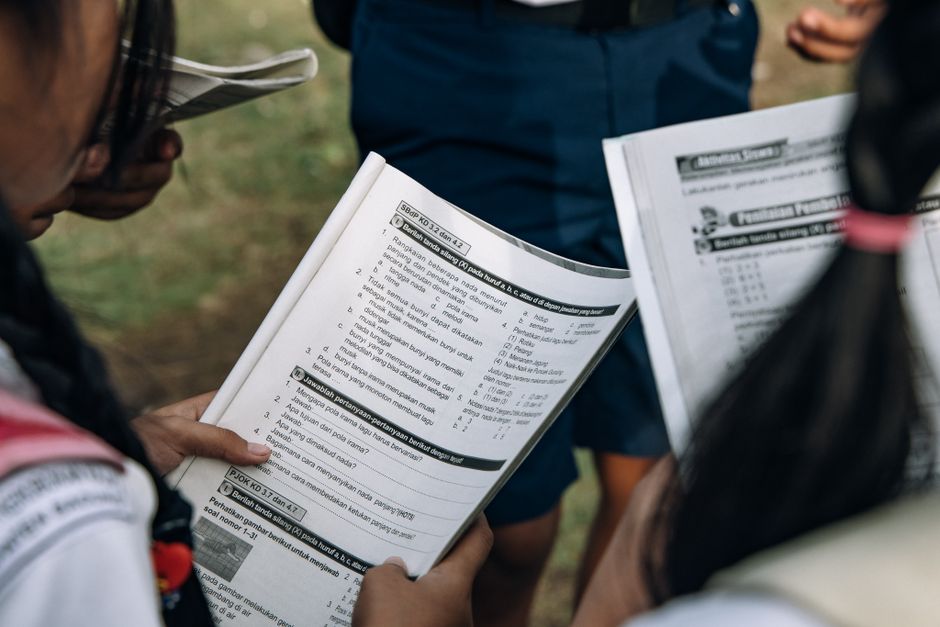
One of the most insidious aspects of the screen inferiority effect is that it hides in plain sight. A meta-analysis published in Computers & Education examined reading performance across mediums and discovered a striking asymmetry: while comprehension dropped on screens, reading speed remained virtually identical to paper reading.
This mismatch explains why many parents and educators fail to notice reading decay until a student faces a formal exam or a complex instruction set. Because the child appears to read quickly, adults assume they are absorbing the content.
This speed-without-retention trap is precisely what the developers of Readle designed their exercises to prevent. By tying speed training directly to immediate comprehension checks, the platform ensures that rapid reading is never achieved by sacrificing understanding. Learn how to train this balance in our module Read Faster. Remember More..
The illusion of competence
When reading speed does not drop on screens, readers experience an "illusion of competence." They finish an article or a digital chapter in record time, feeling successful. However, because their eye movements were erratic and their processing was shallow, they have only retained a vague gist of the text. When asked to recall specific chronological details or draw inferences, their performance drops.
This deficit becomes highly apparent when children undergo cognitive assessments. As outlined in the WISC-V Assessment Guide, weak working memory and processing speed scores correlate directly with a child's tendency to forget the beginning of a sentence by the time they reach the period. When screens compound this cognitive load, even children with average working memory capacity begin to perform as if they have structural deficits.
Engineering screen-resilient readers
Instead of attempting the impossible task of keeping children away from digital devices, the goal must be to build cognitive resilience. Screen-resilient readers are those who can maintain deliberate, deep-processing habits even when a screen invites them to skim. This requires explicit training in holding details, sequence processing, and rapid recall under digital conditions.
The interactive games built into Readle address this by removing the scrolling penalty entirely during training. By presenting text in controlled, adaptive formats, Readle forces the brain to focus on sentence-level structure and working memory preservation. The platform's immediate feedback loop trains the mind to resist the passive skimming habits typical of screen usage, rebuilding the mental discipline required for deep reading on any medium.
Start building the cognitive skills required for strong digital comprehension by testing your working memory with Readle - a daily brain game.