
Why flashcard memorization fails: How brains actually build sight vocabulary

When a first grader effortlessly reads the word "ship," they have physically wired the word's sound structure to its spelling in their brain, rather than memorizing a visual outline. This article answers why traditional whole-word sight memorization often stalls reading development and how the brain builds a permanent sight vocabulary instead. By examining the cognitive process of orthographic mapping formalized by researcher Linnea Ehri, we explain how readers bind sounds to letters for instant retrieval. The digital cognitive training platform Readle applies these scientific principles to replace rote drilling with adaptive games that challenge the brain to decode letters rapidly.
The visual shape myth and the misunderstanding of "sight words"
Many parents struggle with a frustrating reading plateau. A child recognizes high-frequency words on index cards on Monday, but by Wednesday, those same words seem entirely forgotten. This cycle happens because traditional reading practice treats sight words as visual images to memorize. The brain is not a camera, and it does not store written words as flat shapes or outlines.
When we drill words using traditional flashcards, children often guess the word based on the first letter or the relative length of the shape. This guessing strategy creates a temporary visual-to-verbal association in short-term working memory. It fails to store the word in long-term orthographic memory. Once the context changes or the child encounters the word in a book, the visual cue disappears and the reading process grinds to a halt.
Visual memorization fails to build real reading fluency for several reasons:
- It relies on a fragile visual memory system that decays rapidly without constant daily exposure.
- It encourages children to guess words based on initial letters, word lengths, or surrounding pictures.
- It increases cognitive load because storing thousands of unique word outlines is highly inefficient for the brain.
- It bypasses the phonetic connections that allow children to decode unfamiliar words independently.
Using an adaptive tool like Readle helps break this reliance on visual shape guessing. Instead of looking at static cards, children must engage with letters and words in active, changing formats. This shifts the mental task from memorizing a picture to processing actual written symbols. This foundational shift is what allows the brain to move from labored guessing to automatic recognition.
The mechanics of orthographic mapping
To build a permanent sight vocabulary, the brain must undergo a cognitive transition called orthographic mapping. Formalized by reading researcher Linnea Ehri in her study Orthographic Mapping in the Acquisition of Sight Word Reading, this process permanently bonds three distinct elements of a word. The brain must connect the phonological pronunciation (how the word sounds), the orthographic spelling sequence (how the letters look in order), and the semantic meaning.
When these three elements bond, the word becomes a "sight word" in the scientific sense. This means the word is recognized in milliseconds with zero conscious effort. To understand how this works, we must look at how children progress from sounding out letters to instant word retrieval.
Linnea Ehri's phases of mapping
Ehri's research outlines how orthographic mapping develops across four sequential, overlapping phases. The journey begins with the pre-alphabetic phase, where children use non-alphabetic visual cues to guess words. They might recognize a brand logo because of its color, or a word because it has a unique letter shape. This phase offers no real word-learning value.
As children acquire letter-sound knowledge, they enter the partial and full alphabetic phases. Here, they begin connecting the written letters (graphemes) directly to their corresponding sounds (phonemes). In the final consolidated phase, the brain groups common spelling patterns into multi-letter units, such as syllables and morphemes. This allows for rapid, efficient processing of longer words. This progression is detailed further in our guide From Phonemes To Paragraphs.
The difference between sounding out and retrieval
A common point of confusion is the difference between active decoding and instant retrieval. Two students might read the exact same sentence, but one spends ten seconds sounding out "/s/ /h/ /i/ /p/" while the other reads "ship" instantly. Both understand the word, but their brain activity is entirely different.
The student who reads instantly has mapped the word. The brain retrieves the spelling sequence from long-term memory as a unified pattern. The student who sounds it out is still building those neurological pathways. If they rely on visual memorization alone, they never build the highway between spelling and sound. Every encounter with the word remains a slow, manual construction project.
The self-teaching mechanism of phonological recoding
How do readers expand their sight vocabulary to tens of thousands of words? They do it through a self-teaching mechanism described by researcher David Share as phonological recoding. In his publication Orthographic Learning, Phonological Recoding, and Self-Teaching, Share argues that every successful decoding event acts as a self-teaching opportunity.
When a child successfully sounds out a novel word, their brain matches the pronunciation to the printed spelling. This match is what triggers orthographic mapping. It is an automatic process that happens behind the scenes. Without phonological recoding, a child remains dependent on adults to read new words to them.
This is why guessing words from context clues is a dangerous trap. When a child uses a picture on a page to guess that a word is "horse," they bypass the decoding step entirely. They do not look closely at the spelling sequence "h-o-r-s-e." The brain does not form the required orthographic bond.
The next time they see the word without a picture, they cannot read it. This phenomenon is why guessing strategies cause reading speed to stall, as discussed in The context-dependency trap: How guessing words stunts reading speed. At Readle, we design our exercises to prevent this trap by removing misleading context clues and focusing attention on the letters themselves.
Training decoding speed over visual memory
Moving away from visual memorization requires changing how we practice reading at home. Traditional flashcards fail because they lack variation and time control. To build authentic automaticity, practice must force the brain to decode characters rapidly rather than relying on visual memory.
This table compares traditional visual drilling with the active decoding approach used by Readle:
| Feature | Traditional Flashcards | Readle Active Decoding |
|---|---|---|
| Primary Skill | Visual memory / guessing | Phonological-orthographic mapping |
| Word Options | Real words only | Real and nonsense word mixing |
| Difficulty | Static / parent-controlled | Adaptive based on speed and accuracy |
| Timing | Manual / slow | Instant, precise milliseconds |
| Cognitive Load | High (overwhelms working memory) | Optimized (challenges without frustration) |
Mixing real and nonsense words
One of the most effective ways to check if a child is actually mapping words is to mix in nonsense words. Nonsense words like "shob," "plip," or "grent" cannot be guessed from visual memory because the child has never seen them. They cannot be guessed from context because they have no meaning.
To read a nonsense word, the brain must use its decoding circuits. It must translate the graphemes to phonemes and blend them together. If a child can read "shob" quickly but struggles with "ship," it indicates they are relying on memorized visual patterns for real words. Mixing these options forces the brain to remain alert and process every letter. Readle's Short Words Mode applies this technique by blending real and nonsense options into continuous practice streams.
Spaced repetition and adaptive difficulty
Building long-term memory traces requires spaced repetition. The brain needs to encounter words multiple times across different sessions, with increasing intervals of time between them. When a word is practiced once and never seen again, the neural connection decays.
Furthermore, reading exercises must adapt to the learner's current pace. If the text is too easy, the brain runs on autopilot and fails to form new maps. If the text is too difficult, working memory becomes overwhelmed, causing frustration.
The adaptive algorithms built into Readle solve this by adjusting the speed, word length, and display times based on real-time performance. This keeps the learner in the optimal zone for cognitive growth. This balance between speed and precision is what builds true reading comprehension, as detailed in Readle - a daily brain game.
Transitioning your home reading practice
If you want to help your child read faster and remember more, start by auditing your current reading materials. Replace static sight word lists with dynamic, sound-based activities. Encourage your child to pronounce unfamiliar words aloud when reading silently. This active pronunciation is the key that triggers the self-teaching mechanism.
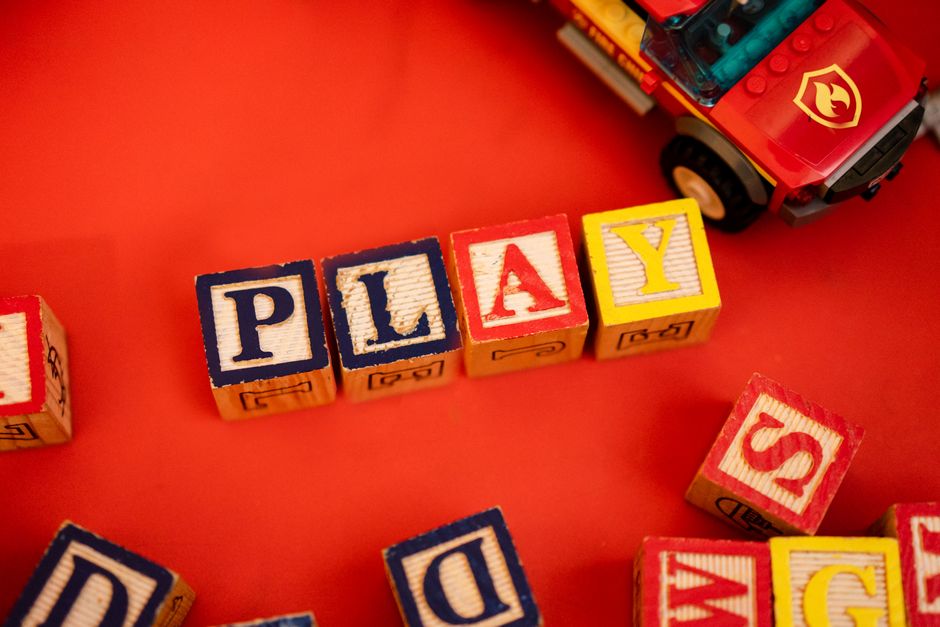
You can use simple household tools to practice. Write letters on individual blocks or index cards. Have your child swap out single letters to see how the sound changes (changing "cat" to "cap," then to "map"). This builds phonological awareness and helps the brain map the relationship between letters and sounds.
For a more consistent daily routine, integrate the digital cognitive training platform Readle into your family's schedule. By tapping through adaptive game modes on your tablet, your child gets the precise, science-backed practice they need without the tension of formal testing. The platform takes care of the scoring, timing, and word selection, allowing you to focus on celebrating your child's progress over time. Visit Readle to start building stronger reading skills today.